Children are often expected to sit still, listen and concentrate. However, concentration does not always begin with stillness. For many children, movement is an important condition for becoming calm, attentive and ready to learn.
Psychomotorik uses movement and sensory experiences to support children’s physical, emotional and cognitive development. It can help children recognise their needs, regulate their energy and improve their ability to concentrate.
Why Children Need Movement
Children process impressions through their bodies. After sitting for a long time, they may become restless, distracted or frustrated. This does not necessarily mean that they are unwilling to cooperate. Their bodies may simply need movement.
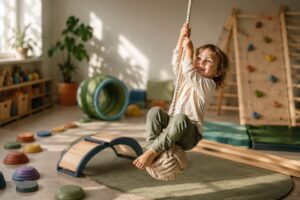
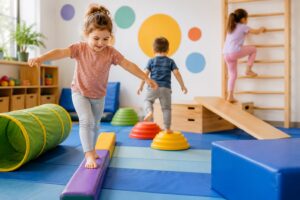
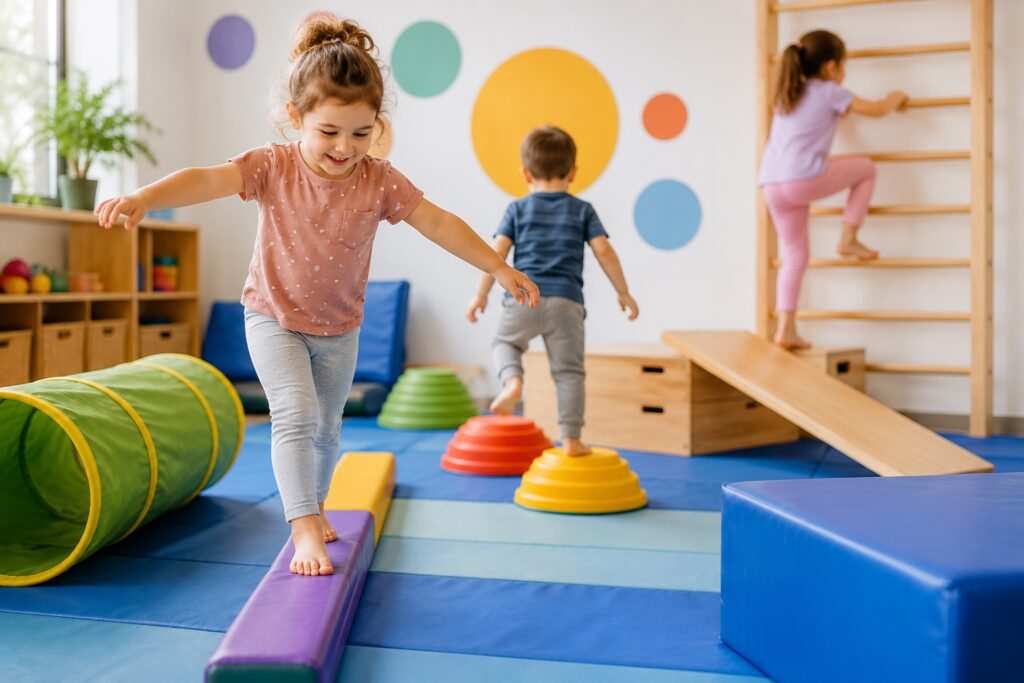
Running, balancing, jumping, pushing or carrying can help children release tension and organise sensory information. After an active movement phase, many children find it easier to focus on quieter activities.
Movement should therefore not always be seen as a distraction from learning. It can be an important part of the learning process.
Understanding Body Signals
Psychomotor activities help children notice changes in their bodies. They may begin to recognise when they feel tense, tired, excited or overwhelmed.
A child can learn questions such as:
- Do I need movement or rest?
- Is this task comfortable or too difficult?
- How does my body feel when I am nervous?
- What helps me calm down?
Understanding these signals is an important step toward emotional self-regulation.
Experiencing Success Without Pressure
Psychomotor sessions usually offer activities with different levels of difficulty. Children can choose tasks that feel manageable and gradually attempt more challenging ones.
This creates opportunities for genuine success. A child who initially avoids climbing may later take the first step onto a low platform. This small achievement can be more valuable than completing a task because an adult demanded it.
Such experiences strengthen persistence and confidence.
Movement, Attention and Learning
Activities involving balance, rhythm, coordination and spatial orientation require focused attention. Children must plan movements, react to changes and adjust their bodies.
These processes can support skills that are also important in everyday learning situations:
- following instructions
- maintaining attention
- controlling impulses
- planning actions
- coping with frustration
- completing tasks
Psychomotorik does not force children to become calm. Instead, it helps them develop the physical and emotional foundations required for concentration.
A Holistic Approach
Every child regulates energy differently. Some children need active movement, while others benefit from quieter sensory experiences such as rocking, wrapping themselves in a blanket or working with soft materials.
Psychomotorik recognises these individual differences. By combining movement, perception and emotional experience, it helps children discover strategies that support their well-being and learning.